-797x638.jpg "Homo naledi")
Homo naledi
202187202187Homo naledi (†Homo ergaster (Berger et al., 2015))
Order: Primates
Family: Hominidae
Dimensions: height - 130-145 сm, weight - 30-45 kg
Temporal range: Middle Pleistocene of Southern Africa (0.335–0.236 Ma)
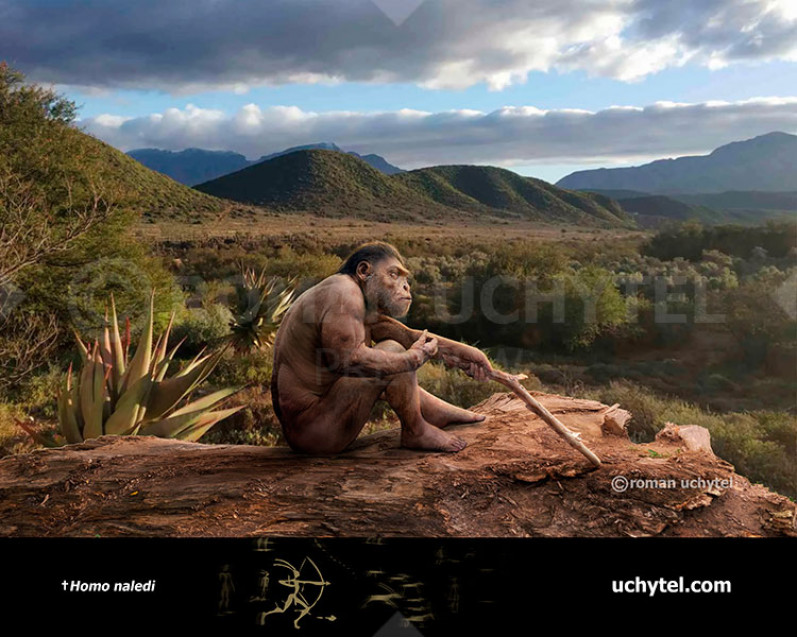
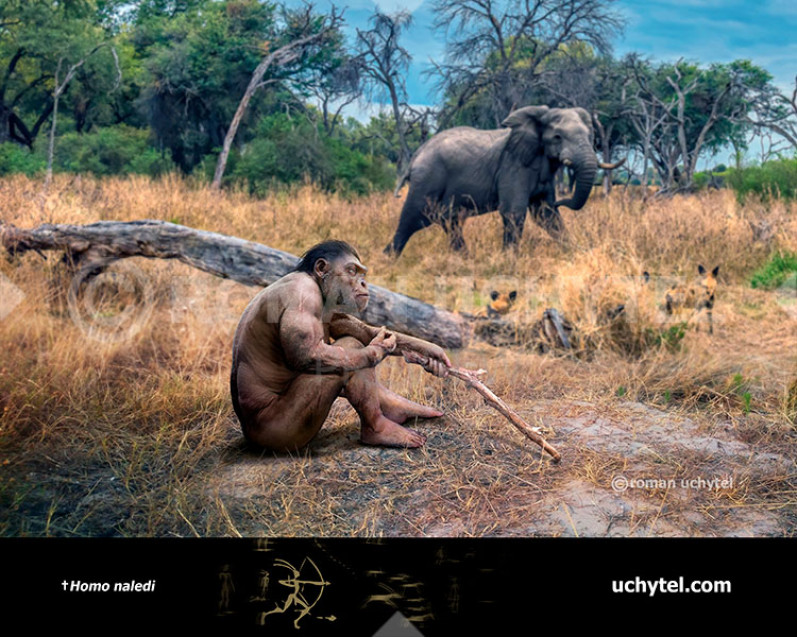
Homo naledi had a remarkably small brain, only slightly larger than that of a chimpanzee. It was about one-third the size of a modern human brain, yet the rest of the body displayed a surprising mixture of primitive and human-like features. Living in South Africa around 335,000 - 241,000 years ago, at a time when early Homo sapiens already existed in Africa, these ancient humans stood about 1.5 metres tall. Their feet and long legs were strikingly human-like and well suited for walking upright, while curved fingers and powerful shoulders suggest that climbing remained important. This unusual combination challenged the simple idea that human evolution progressed neatly from primitive bodies and small brains toward increasingly modern forms. Instead, Homo naledi survived surprisingly late as a unique evolutionary experiment alongside other members of the human family.
Their story became even stranger because of where they were found. In 2013, explorers squeezed through the extraordinarily narrow passages of South Africa’s Rising Star Cave and discovered more than 1,500 fossil remains deep inside the Dinaledi Chamber. The name naledi means «star» in Sesotho (a language spoken in southern Africa), while dinaledi means «stars» - a fitting name for inhabitants of the Rising Star Cave. Why so many bodies ended up in these dark, difficult-to-reach chambers remains one of paleoanthropology’s most fascinating mysteries. Researchers have argued that Homo naledi deliberately placed or even buried their dead there, and geometric markings discovered on the cave walls have been proposed as their work - extraordinary possibilities that remain scientifically debated. Their mysterious underground world inspired Lee Berger and John Hawks’ book Cave of Bones (2023) and the Netflix documentary Unknown: Cave of Bones (2023), turning Homo naledi into a modern symbol of how much remains unknown about the minds and behaviour of our ancient relatives.


-70x56.jpg "3")
Homo naledi (†Homo ergaster (Berger et al., 2015))
Order: Primates
Family: Hominidae
Dimensions: height - 130-145 сm, weight - 30-45 kg
Temporal range: Middle Pleistocene of Southern Africa (0.335–0.236 Ma)
Homo naledi had a remarkably small brain, only slightly larger than that of a chimpanzee. It was about one-third the size of a modern human brain, yet the rest of the body displayed a surprising mixture of primitive and human-like features. Living in South Africa around 335,000 - 241,000 years ago, at a time when early Homo sapiens already existed in Africa, these ancient humans stood about 1.5 metres tall. Their feet and long legs were strikingly human-like and well suited for walking upright, while curved fingers and powerful shoulders suggest that climbing remained important. This unusual combination challenged the simple idea that human evolution progressed neatly from primitive bodies and small brains toward increasingly modern forms. Instead, Homo naledi survived surprisingly late as a unique evolutionary experiment alongside other members of the human family.
Their story became even stranger because of where they were found. In 2013, explorers squeezed through the extraordinarily narrow passages of South Africa’s Rising Star Cave and discovered more than 1,500 fossil remains deep inside the Dinaledi Chamber. The name naledi means «star» in Sesotho (a language spoken in southern Africa), while dinaledi means «stars» - a fitting name for inhabitants of the Rising Star Cave. Why so many bodies ended up in these dark, difficult-to-reach chambers remains one of paleoanthropology’s most fascinating mysteries. Researchers have argued that Homo naledi deliberately placed or even buried their dead there, and geometric markings discovered on the cave walls have been proposed as their work - extraordinary possibilities that remain scientifically debated. Their mysterious underground world inspired Lee Berger and John Hawks’ book Cave of Bones (2023) and the Netflix documentary Unknown: Cave of Bones (2023), turning Homo naledi into a modern symbol of how much remains unknown about the minds and behaviour of our ancient relatives.