Cro-Magnons (Homo sapiens)
2841428414Cro-Magnons (Homo
sapiens)
Epoch: Late Pleistocene (about 45,000-10,000
years ago)
Habitat: Europe
Dimensions: height ≈160-180 cm, weight ≈55-80
kg
Diet: omnivorous
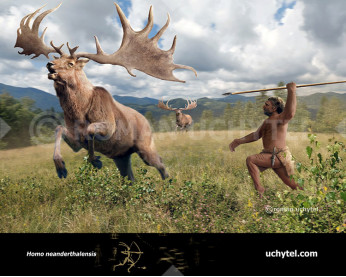
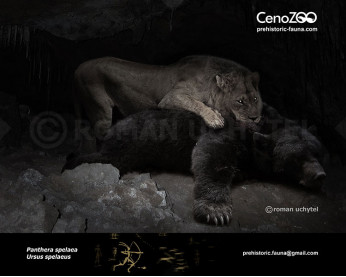
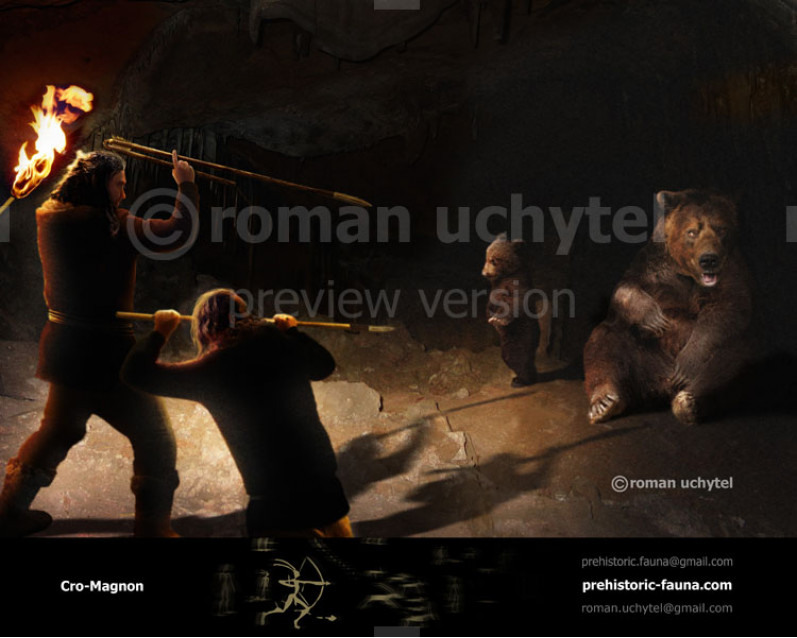
Cro-Magnons were not a different human species - they were us. These early modern Europeans looked much like people today, but lived alongside mammoths, cave lions and Neanderthals during the last Ice Age. They belonged to Homo sapiens, a species that originated in Africa hundreds of thousands of years earlier and later spread across the world. When modern humans reached Europe, they encountered Neanderthals and even interbred with them, leaving traces of Neanderthal DNA in many people today. Unlike the stereotypical «caveman», they created sophisticated tools, jewellery and spectacular cave art, and some burials with red ochre and ornaments have inspired theories about rituals and beliefs in an afterlife.
Their name comes from the Cro-Magnon rock shelter in France, where human remains were discovered in 1868. Over time, Cro-Magnons became archetypal Stone Age heroes of popular culture, appearing in William Golding’s The Inheritors (1955) and Jean M. Auel’s The Clan of the Cave Bear (1980), among many other works. Their world has also been recreated in the TV docudrama Life in the Time of Cro-Magnon (2019) and the adventure game Echo: Secrets of the Lost Cavern (2005), whose young Cro-Magnon hero explores a world inspired by the cave art of Lascaux.
The irony is that
Cro-Magnons were not primitive strangers from a vanished branch of humanity:
they were early Europeans of our own species, separated from us by thousands of
years of culture, but not by evolution.
Cro-Magnons (Homo
sapiens)
Epoch: Late Pleistocene (about 45,000-10,000
years ago)
Habitat: Europe
Dimensions: height ≈160-180 cm, weight ≈55-80
kg
Diet: omnivorous
Cro-Magnons were not a different human species - they were us. These early modern Europeans looked much like people today, but lived alongside mammoths, cave lions and Neanderthals during the last Ice Age. They belonged to Homo sapiens, a species that originated in Africa hundreds of thousands of years earlier and later spread across the world. When modern humans reached Europe, they encountered Neanderthals and even interbred with them, leaving traces of Neanderthal DNA in many people today. Unlike the stereotypical «caveman», they created sophisticated tools, jewellery and spectacular cave art, and some burials with red ochre and ornaments have inspired theories about rituals and beliefs in an afterlife.
Their name comes from the Cro-Magnon rock shelter in France, where human remains were discovered in 1868. Over time, Cro-Magnons became archetypal Stone Age heroes of popular culture, appearing in William Golding’s The Inheritors (1955) and Jean M. Auel’s The Clan of the Cave Bear (1980), among many other works. Their world has also been recreated in the TV docudrama Life in the Time of Cro-Magnon (2019) and the adventure game Echo: Secrets of the Lost Cavern (2005), whose young Cro-Magnon hero explores a world inspired by the cave art of Lascaux.
The irony is that
Cro-Magnons were not primitive strangers from a vanished branch of humanity:
they were early Europeans of our own species, separated from us by thousands of
years of culture, but not by evolution.