-797x638.jpg "Metapterodon")
Metapterodon
202175202175Metapterodon (†Metapterodon (Stromer, 1926))
Class: Mammalia
Order: †Hyaenodonta
Superfamily: †Hyainailouroidea
Family: †Hyainailouridae
Time period: arly Oligocene to middle Miocene (Northern Africa, Asia)
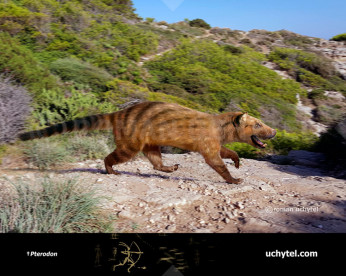
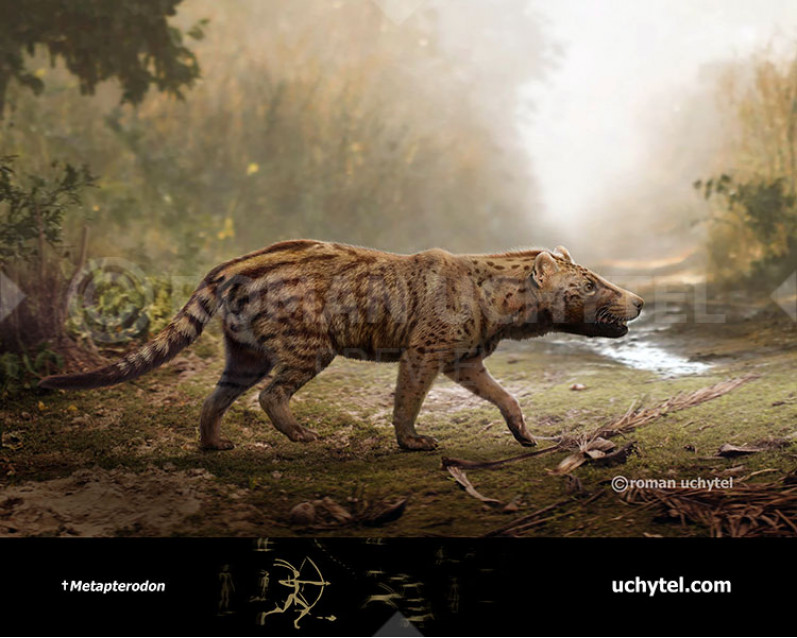
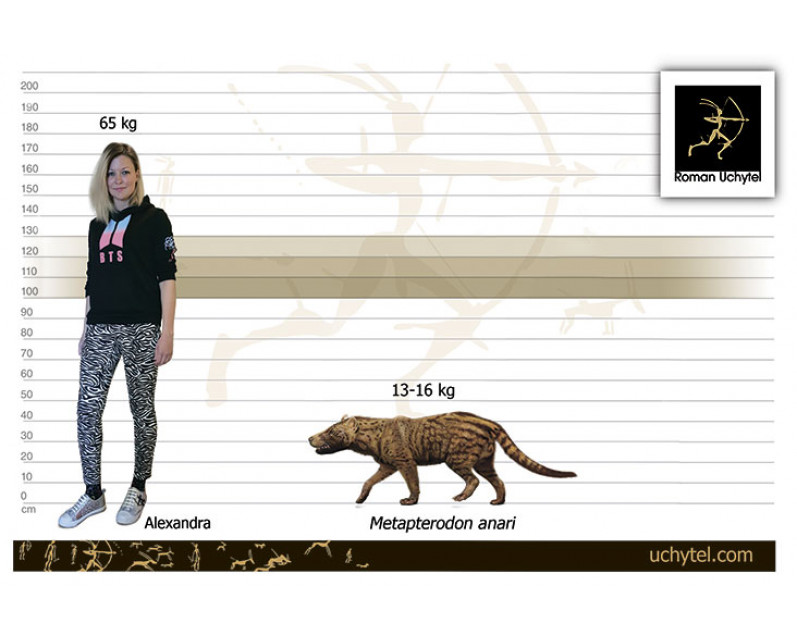
Size: Up to 1,2 meters long. 40 cm tall at the shoulder. Weight estimated at up to 16 kg (Metapterodon anari)
Metapterodon is an extinct genus of hyainailourid hyaenodonts of the subfamily Hyainailourinae, that lived in Africa during the early Oligocene to early Miocene. Fossils of Metapterodon were recovered from Egypt, Uganda, Elisabeth Bay Formation in Namibia, Nagri Formation in Pakistan, and Rusinga Island and Karungu in Kenya.
New fossil material identified as hyaenodonts, from the Siwaliks of Pakistan provide significant new information on this important group of carnivores. The new fossils represent the first record of the genus from the Siwaliks, expanding its range in southern Asia. They also represent the youngest temporal occurrence of the genus (Middle Miocene). One of thefossil represents a new species, Metapterodon anari sp. nov. Not only does this confirm its presence in the Miocene Siwalik deposits of the Indian subcontinent but also represents an important temporal occurrence for the genus. It represents the youngest occurrence of the genus worldwide but may also represent the youngest occurrence of any hyaenodont.

-70x56.jpg "2")

Metapterodon (†Metapterodon (Stromer, 1926))
Class: Mammalia
Order: †Hyaenodonta
Superfamily: †Hyainailouroidea
Family: †Hyainailouridae
Time period: arly Oligocene to middle Miocene (Northern Africa, Asia)
Size: Up to 1,2 meters long. 40 cm tall at the shoulder. Weight estimated at up to 16 kg (Metapterodon anari)
Metapterodon is an extinct genus of hyainailourid hyaenodonts of the subfamily Hyainailourinae, that lived in Africa during the early Oligocene to early Miocene. Fossils of Metapterodon were recovered from Egypt, Uganda, Elisabeth Bay Formation in Namibia, Nagri Formation in Pakistan, and Rusinga Island and Karungu in Kenya.
New fossil material identified as hyaenodonts, from the Siwaliks of Pakistan provide significant new information on this important group of carnivores. The new fossils represent the first record of the genus from the Siwaliks, expanding its range in southern Asia. They also represent the youngest temporal occurrence of the genus (Middle Miocene). One of thefossil represents a new species, Metapterodon anari sp. nov. Not only does this confirm its presence in the Miocene Siwalik deposits of the Indian subcontinent but also represents an important temporal occurrence for the genus. It represents the youngest occurrence of the genus worldwide but may also represent the youngest occurrence of any hyaenodont.
-346x277.jpg "Hyaenodon horridus")
-346x277.jpg "Megistotherium")