-797x638.jpg "Plesiohipparion")
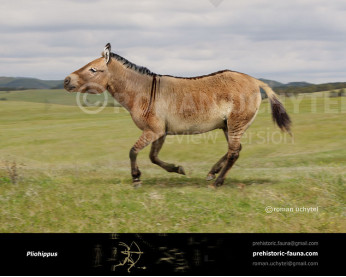
Plesiohipparion
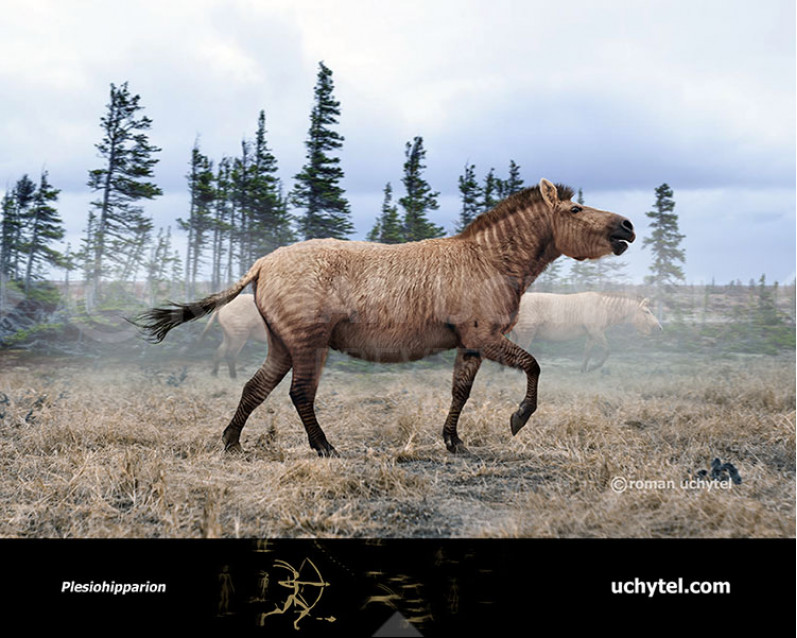
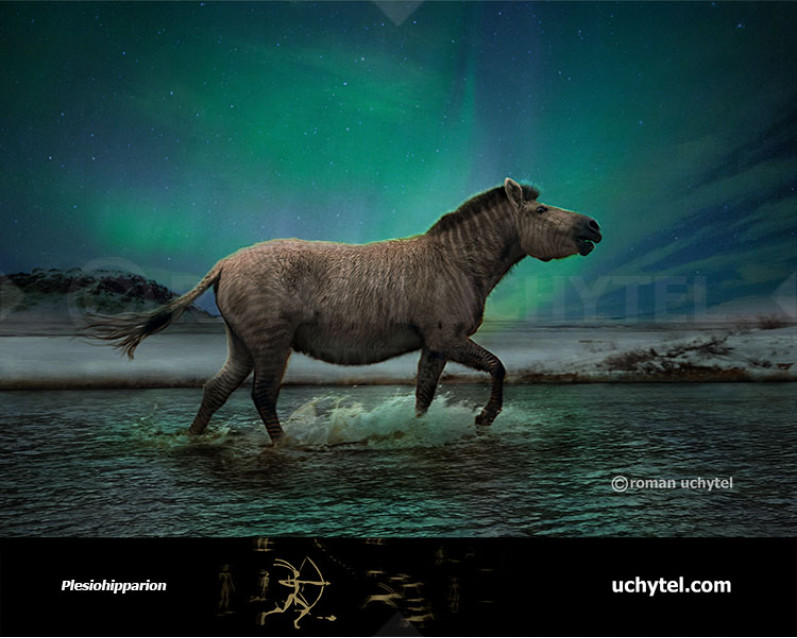
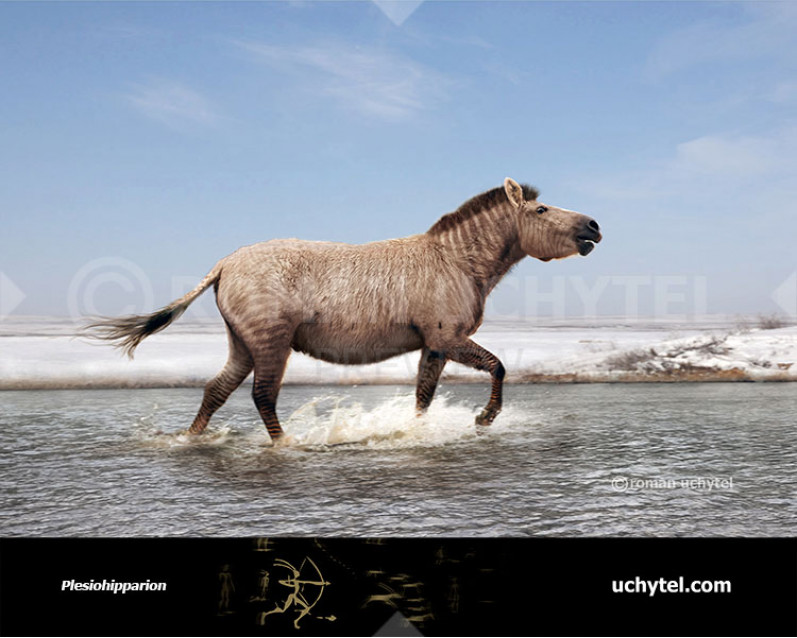
202137202137Hipparion (Plesiohipparion) houfense (Teilard de Charden & Young 1931)
Plesiohipparion (Plesiohipparion Qiu, Huang & Guo, 1987)
Order: Perissodactyla
Family: Equidae
Dimensions: length - 2,3 m, height - 130-160 сm, weight ~ 160-350 kg
Temporal range: during the late Miocene to late Pliocene (Asia, Europe and North America)
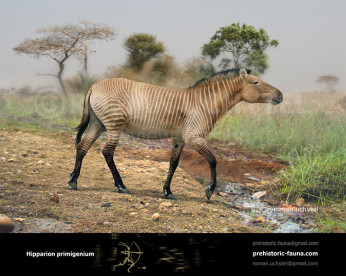
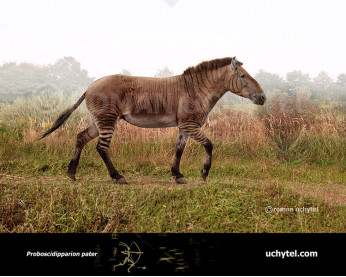
Hipparionine horses arose in North America circa 16 Ma, underwent a taxonomically well defined evolutionary radiation through the Middle Miocene and extended their range into the Old World circa 11.2 Ma. Plesiohipparion is a genus of hipparionine horses that first appears in the latest Miocene of SW Tibet and becomes a common equid in the Pliocene of China. Plesiohipparion is distinct from the late Miocene clades Hippotherium, Hipparion, Cremohipparion and Sivalhippus and is related to the Chinese Proboscidipparion and African Eurygnathohippus. Plesiohipparion extended its range into Turkey, southwest Europe and Arctic Canada during the Pliocene. Plesiohipparion shanxiense n. sp. is the largest, and at the same time the youngest species of the genus. Plesiohipparion shanxiense n. sp. is most closely related to the earlier, smaller species Plesiohipparion houfenense differing in size and length of snout. Whereas Plesiohipparion likely originated in China, it dispersed westward to Turkey and Spain. Plesiohipparion is likely the sister taxon of the African Eurygnathohippus based on a number of shared-derived characters. Plesiohipparion shanxiense n. sp. would appear to be restricted to China and the terminal species of this clade. The fossil record has revealed that both Plesiohipparion and Proboscidipparion first appeared in China in the late Miocene and later, in the PlioPleistocene, extended their ranges westward into west Asia and Europe.


-70x56.jpg "3")

Hipparion (Plesiohipparion) houfense (Teilard de Charden & Young 1931)
Plesiohipparion (Plesiohipparion Qiu, Huang & Guo, 1987)
Order: Perissodactyla
Family: Equidae
Dimensions: length - 2,3 m, height - 130-160 сm, weight ~ 160-350 kg
Temporal range: during the late Miocene to late Pliocene (Asia, Europe and North America)
Hipparionine horses arose in North America circa 16 Ma, underwent a taxonomically well defined evolutionary radiation through the Middle Miocene and extended their range into the Old World circa 11.2 Ma. Plesiohipparion is a genus of hipparionine horses that first appears in the latest Miocene of SW Tibet and becomes a common equid in the Pliocene of China. Plesiohipparion is distinct from the late Miocene clades Hippotherium, Hipparion, Cremohipparion and Sivalhippus and is related to the Chinese Proboscidipparion and African Eurygnathohippus. Plesiohipparion extended its range into Turkey, southwest Europe and Arctic Canada during the Pliocene. Plesiohipparion shanxiense n. sp. is the largest, and at the same time the youngest species of the genus. Plesiohipparion shanxiense n. sp. is most closely related to the earlier, smaller species Plesiohipparion houfenense differing in size and length of snout. Whereas Plesiohipparion likely originated in China, it dispersed westward to Turkey and Spain. Plesiohipparion is likely the sister taxon of the African Eurygnathohippus based on a number of shared-derived characters. Plesiohipparion shanxiense n. sp. would appear to be restricted to China and the terminal species of this clade. The fossil record has revealed that both Plesiohipparion and Proboscidipparion first appeared in China in the late Miocene and later, in the PlioPleistocene, extended their ranges westward into west Asia and Europe.