-797x638.jpg "Pampaluctor")
Pampaluctor
202199202199Pampaluctor calibar (†Pampaluctor (del Campo et al., 2026))
Order: Sparassodonta
Family: Thylacosmilidae
Time period: lived in South America during the Late Pliocene–early Pleistocene
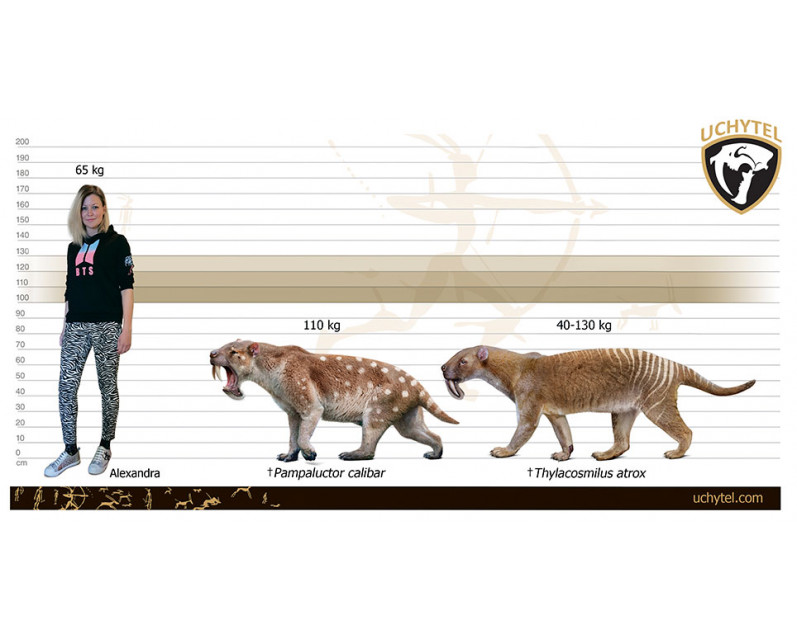
Size: Weight estimated at up to 110 kg.
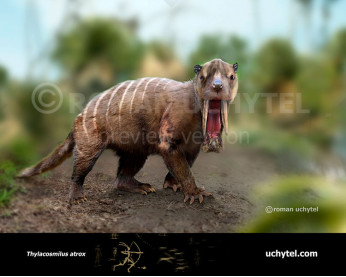
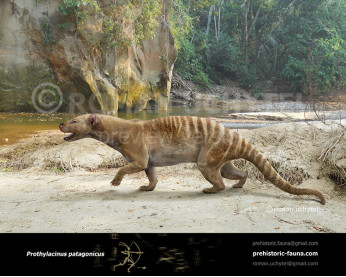
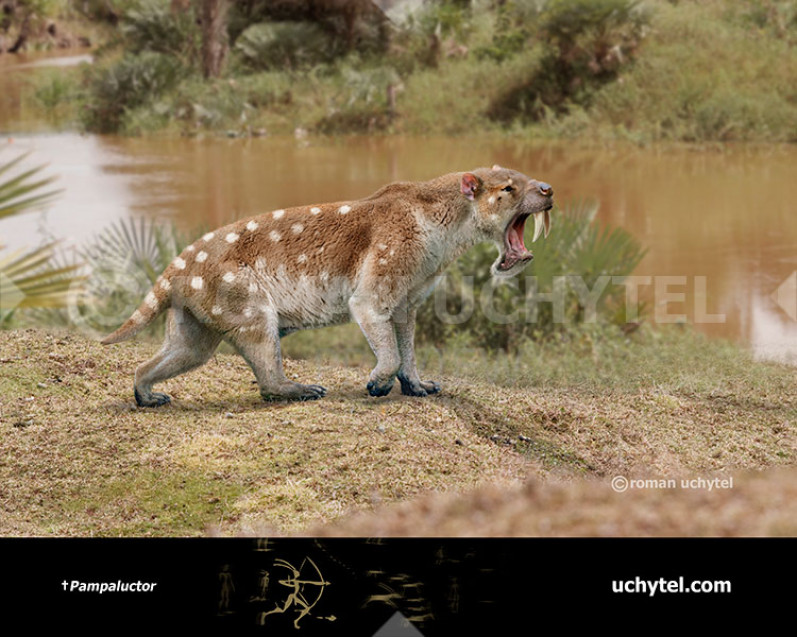
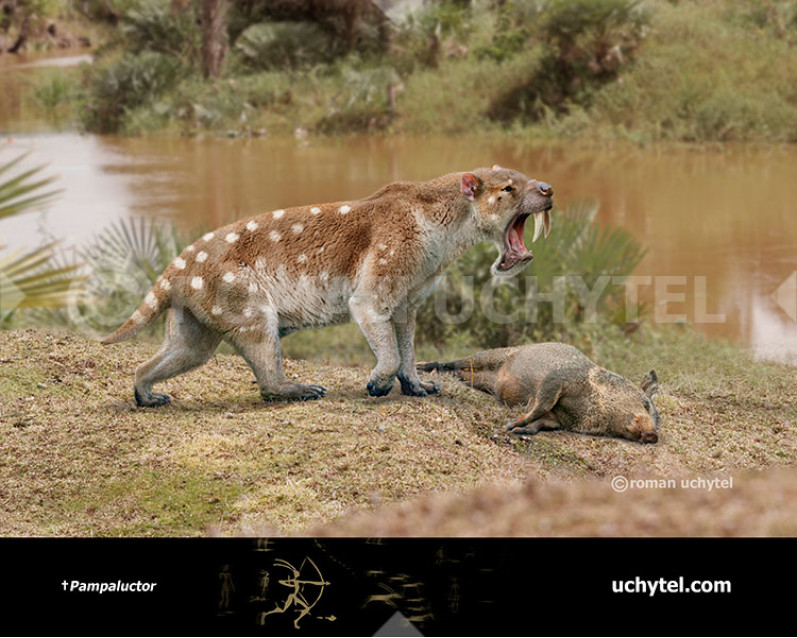
Pampaluctor is an extinct genus of metatherian mammal in the Thylacosmilidae, a family of carnivorous, saber-toothed sparassodonts. The genus contains a single species, Pampaluctor calibar, known from a partial skeleton. It is known from the Vorohué Formation of Argentina, which is assigned to the Vorohuean subage of the Marplatan South American land mammal age (SALMA), which is correlated to the late Pliocene to early Pleistocene epochs. It is the geologically youngest thylacosmilid (and sparassodont), as other members of this clade did not cross the Plio-Pleistocene boundary. Though many of the skeletal elements of the only definitive Pampaluctor specimen are incomplete, the atlas (first cervical vertebra) and humerus are notably more robust than the closely related Thylacosmilus. These combined features suggest powerful neck muscles and strong forelimbs. In Pampaluctor, the tibia was likely shorter than the femur, which, combined with the robust neck and arms, is suggestive of an ambush predator ecology capable of grasping and immobilizing prey. The preserved caudal vertebrae are proportionally short compared to other sparassodonts, instead being comparable to the extinct thylacine, a marsupial. Based on the measurements of the femur, del Campo et al. (2026) estimated the body mass of Pampaluctor at 96–100 kg, comparable to or larger than the holotype of Thylacosmilus atrox, which has an estimated body mass ranging from 55.9–107.9 kg. The only sparassodonts with an estimated larger size are some proborhyaenids, at up to 200 kg. For comparison, male pumas and jaguars—two extant felids—have body masses of 60 kg and 85 kg, respectively. As such, Pampaluctor is not only among the largest sparassodonts known, but also one of the largest mammalian predators known from South America.[


-70x56.jpg "3")

Pampaluctor calibar (†Pampaluctor (del Campo et al., 2026))
Order: Sparassodonta
Family: Thylacosmilidae
Time period: lived in South America during the Late Pliocene–early Pleistocene
Size: Weight estimated at up to 110 kg.
Pampaluctor is an extinct genus of metatherian mammal in the Thylacosmilidae, a family of carnivorous, saber-toothed sparassodonts. The genus contains a single species, Pampaluctor calibar, known from a partial skeleton. It is known from the Vorohué Formation of Argentina, which is assigned to the Vorohuean subage of the Marplatan South American land mammal age (SALMA), which is correlated to the late Pliocene to early Pleistocene epochs. It is the geologically youngest thylacosmilid (and sparassodont), as other members of this clade did not cross the Plio-Pleistocene boundary. Though many of the skeletal elements of the only definitive Pampaluctor specimen are incomplete, the atlas (first cervical vertebra) and humerus are notably more robust than the closely related Thylacosmilus. These combined features suggest powerful neck muscles and strong forelimbs. In Pampaluctor, the tibia was likely shorter than the femur, which, combined with the robust neck and arms, is suggestive of an ambush predator ecology capable of grasping and immobilizing prey. The preserved caudal vertebrae are proportionally short compared to other sparassodonts, instead being comparable to the extinct thylacine, a marsupial. Based on the measurements of the femur, del Campo et al. (2026) estimated the body mass of Pampaluctor at 96–100 kg, comparable to or larger than the holotype of Thylacosmilus atrox, which has an estimated body mass ranging from 55.9–107.9 kg. The only sparassodonts with an estimated larger size are some proborhyaenids, at up to 200 kg. For comparison, male pumas and jaguars—two extant felids—have body masses of 60 kg and 85 kg, respectively. As such, Pampaluctor is not only among the largest sparassodonts known, but also one of the largest mammalian predators known from South America.[
-346x277.jpg "Arminiheringia")