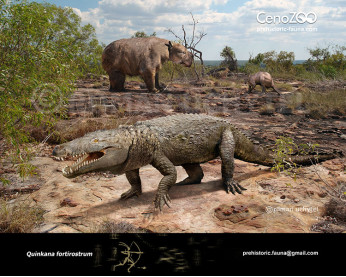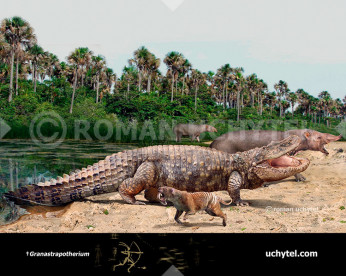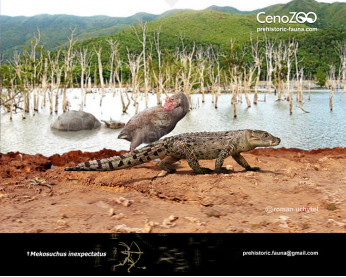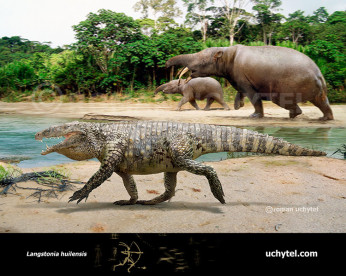
-797x638.jpg "Iberosuchus")
Iberosuchus
202200202200Iberosuchus (†Iberosuchus (Antunes, 1975))
Class: Reptilia
Order: Crocodilia
Family: †Sebecidae
Dimensions: length – 2-4 m, weight – 300 kg
Temporal range: middle Eocene (Western Europe, ~50.8–37.8 Ma)
A typical representative: †Iberosuchus macrodon
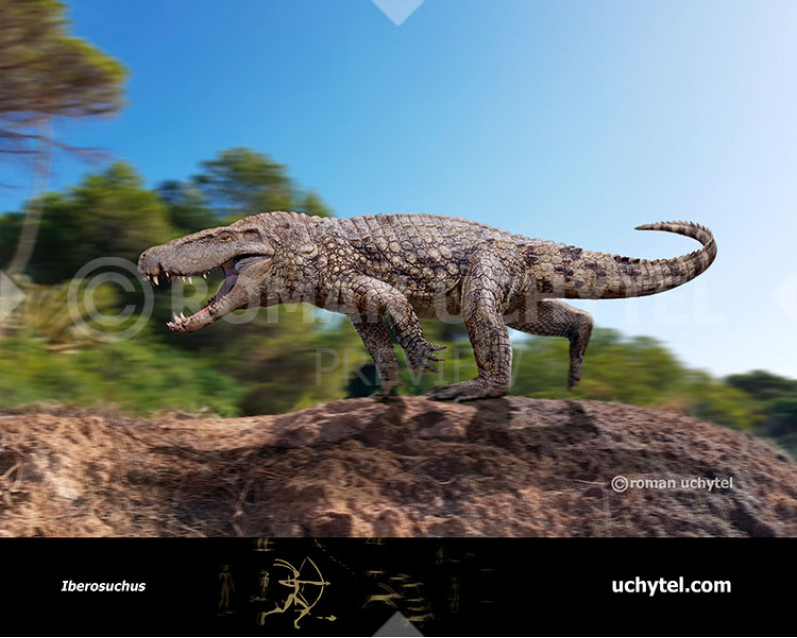
Iberosuchus is a genus of extinct sebecosuchian mesoeucrocodylian found in Western Europe from the Eocene. Remains from Portugal was described in 1975 by Antunes as a sebecosuchian crocodilian. This genus has one species: Iberosuchus macrodon[ (meaning "large toothed). Iberosuchus was a carnivore. Unlike the crocodilians today, they were not aquatic but were instead terrestrial.
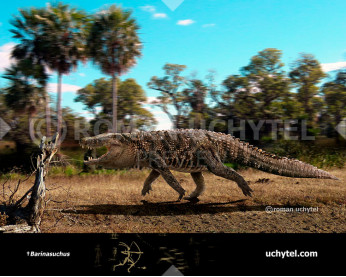
The limb morphology of Iberosuchus suggests that it had an erect stance and was a large terrestrial predator.
The first of its fossils were cranial remains found in Portugal, and later more fossils were found in France and Spain. They are only known from very fragmentary fossils, elements of the skull, dentary, teeth and osteoderm.

-70x56.jpg "2")
Iberosuchus (†Iberosuchus (Antunes, 1975))
Class: Reptilia
Order: Crocodilia
Family: †Sebecidae
Dimensions: length – 2-4 m, weight – 300 kg
Temporal range: middle Eocene (Western Europe, ~50.8–37.8 Ma)
A typical representative: †Iberosuchus macrodon
Iberosuchus is a genus of extinct sebecosuchian mesoeucrocodylian found in Western Europe from the Eocene. Remains from Portugal was described in 1975 by Antunes as a sebecosuchian crocodilian. This genus has one species: Iberosuchus macrodon[ (meaning "large toothed). Iberosuchus was a carnivore. Unlike the crocodilians today, they were not aquatic but were instead terrestrial.
The limb morphology of Iberosuchus suggests that it had an erect stance and was a large terrestrial predator.
The first of its fossils were cranial remains found in Portugal, and later more fossils were found in France and Spain. They are only known from very fragmentary fossils, elements of the skull, dentary, teeth and osteoderm.