-1-797x638.jpg "Barinasuchus")
-797x638.jpg "Barinasuchus")
Barinasuchus
202195202195Barinasuchus (†Barinasuchus (Paolillo and Linares, 2007))
Class: Reptilia
Order: Crocodilia
Family: †Sebecidae
Dimensions: length – 3-6,5 m, weight – 500 kg
Temporal range: middle Eocene and the Late Miocene (South America, ~42–11.6 Ma)
A typical representative: †Barinasuchus arveloi
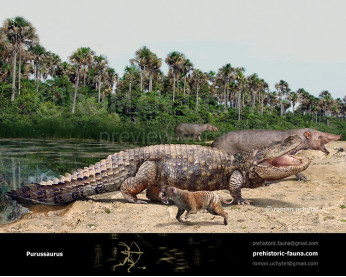
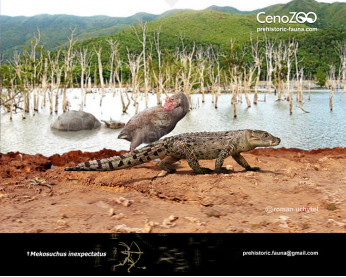
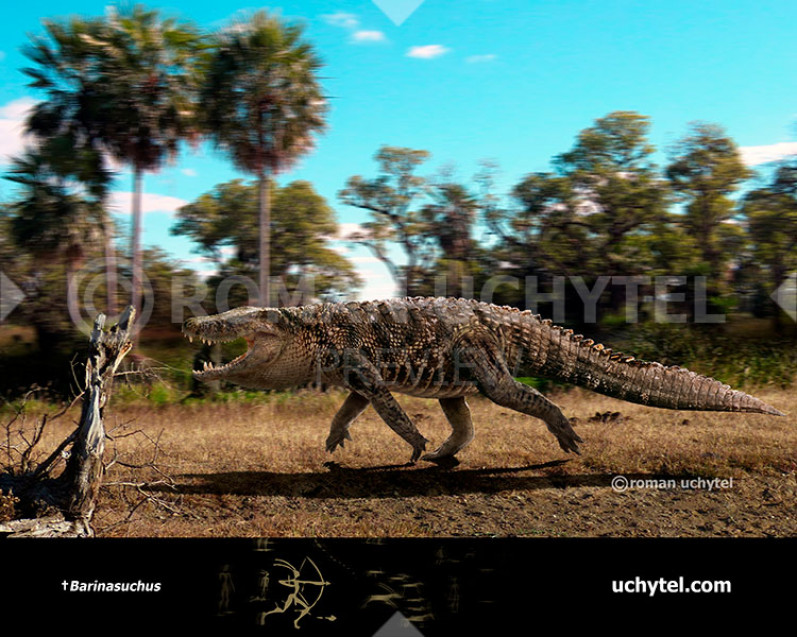
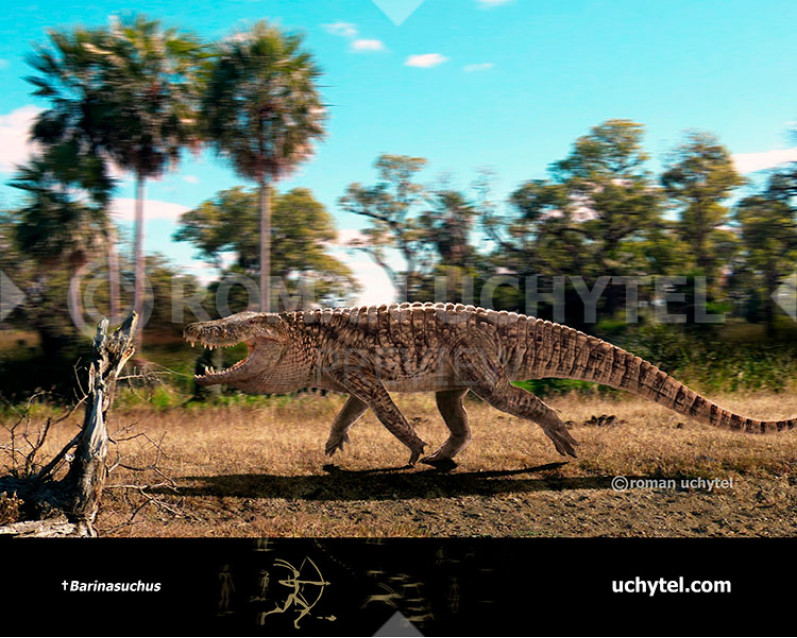
Barinasuchus is an extinct genus of sebecid mesoeucrocodylian was lived in Argentina, Peru, and Venezuela between the middle Eocene and the Late Miocene, ~42–11.6 Ma. Barinasuchus' body length has been estimated, based on comparisons with other crocodyliforms, at between 6.3–10 m, though smaller estimates of 3–4 m were suggested more recently. Its body mass was initially estimated at 1,610–1,720 kg, which would make it considerably larger than any terrestrial predatory mammal alive today. However, a smaller estimate of 500 kg has since been put forward. Barinasuchus was heterodont, meaning that it possessed two types of teeth. Those of the premaxilla and the front of the maxilla were longer and more conical than those further back, which were shorter and thinner. Its mandible was very robust in comparison to other sebecids, and was widest at the point of the fourth mandibular (lower jaw) tooth. That tooth was very large, and slotted into a prominent notch between the premaxilla and maxilla when the jaws were closed.
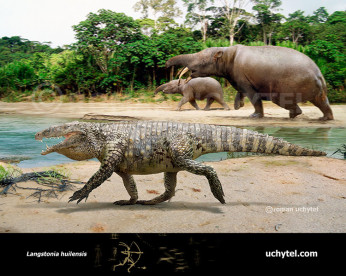
Barinasuchus primarily inhabited lacustrine (lake/lakeside) environments. During the Miocene, it inhabited the Pebas Mega-Wetland, or Pebas System, a 390,000 sq mi (1,000,000 km2) expanse of lakes and marshes formed by the growth of the Andes. It, alongside its contemporary relative Langstonia, were part of an endemic northern South American predatory guild which consisted primarily of reptiles and birds. Both were among the last and largest of the sebecids, and significantly outlasted other giant taxa, such as the European Dentaneosuchus, possibly due to their isolation. The extinction of Barinasuchus and other parts of this reptile-heavy guild may have been the result of the loss of the Pebas Mega-Wetland, or the diversification of mammalian predators and the phorusrhacid birds, although this has been questioned by some studies.


-1-70x56.jpg "3")
-70x56.jpg "4")
Barinasuchus (†Barinasuchus (Paolillo and Linares, 2007))
Class: Reptilia
Order: Crocodilia
Family: †Sebecidae
Dimensions: length – 3-6,5 m, weight – 500 kg
Temporal range: middle Eocene and the Late Miocene (South America, ~42–11.6 Ma)
A typical representative: †Barinasuchus arveloi
Barinasuchus is an extinct genus of sebecid mesoeucrocodylian was lived in Argentina, Peru, and Venezuela between the middle Eocene and the Late Miocene, ~42–11.6 Ma. Barinasuchus' body length has been estimated, based on comparisons with other crocodyliforms, at between 6.3–10 m, though smaller estimates of 3–4 m were suggested more recently. Its body mass was initially estimated at 1,610–1,720 kg, which would make it considerably larger than any terrestrial predatory mammal alive today. However, a smaller estimate of 500 kg has since been put forward. Barinasuchus was heterodont, meaning that it possessed two types of teeth. Those of the premaxilla and the front of the maxilla were longer and more conical than those further back, which were shorter and thinner. Its mandible was very robust in comparison to other sebecids, and was widest at the point of the fourth mandibular (lower jaw) tooth. That tooth was very large, and slotted into a prominent notch between the premaxilla and maxilla when the jaws were closed.
Barinasuchus primarily inhabited lacustrine (lake/lakeside) environments. During the Miocene, it inhabited the Pebas Mega-Wetland, or Pebas System, a 390,000 sq mi (1,000,000 km2) expanse of lakes and marshes formed by the growth of the Andes. It, alongside its contemporary relative Langstonia, were part of an endemic northern South American predatory guild which consisted primarily of reptiles and birds. Both were among the last and largest of the sebecids, and significantly outlasted other giant taxa, such as the European Dentaneosuchus, possibly due to their isolation. The extinction of Barinasuchus and other parts of this reptile-heavy guild may have been the result of the loss of the Pebas Mega-Wetland, or the diversification of mammalian predators and the phorusrhacid birds, although this has been questioned by some studies.