Feliopsis
202178202178Crocodile-hunting water tiger (Feliopsis (Stremme, 1911))
Order: Carnivora
Family: Felidae
Time period: Pleistocene of Java
Size: 1.9 m in length, 85 cm in height, ~180 kg of weight.
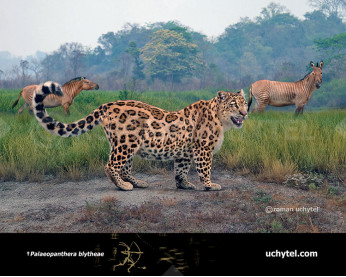
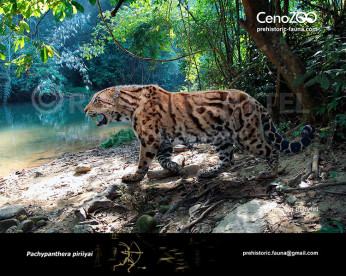
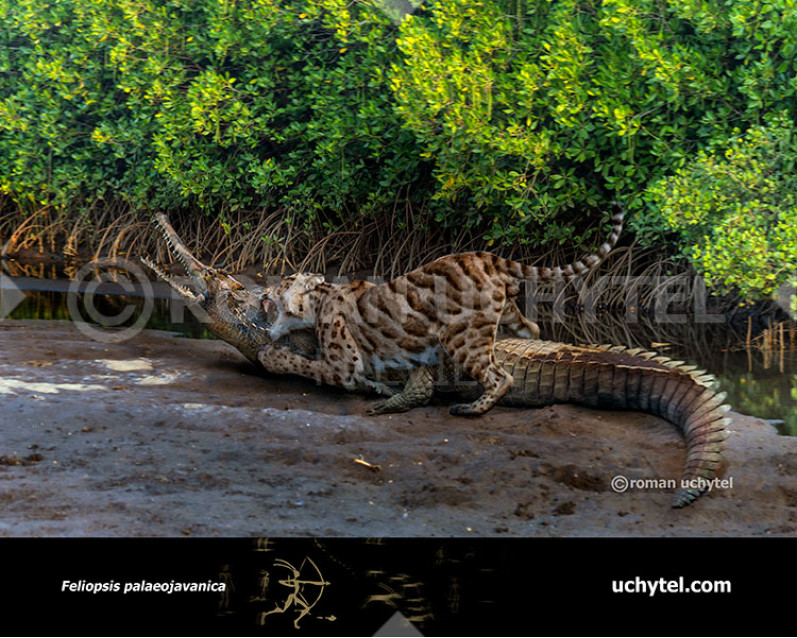
The Late Miocene giant pantherine cat Pachypanthera piriyai, described from the Khorat sand pits, Nakhon Ratchasima Province, northeastern Thailand, draws attention to a correspondingly but even more highly specialised Pleistocene cat from Java. The latter form was published as Feliopsis palaeojavanica, and originates from the Homo erectus type-locality Trinil, dated either from the latest Early Pleistocene or the late early Middle Pleistocene. It was misidentified in subsequent studies based on the methodology of the time, when allometry statistics were not yet usual, assigned to Panthera tigris and forgotten. The Khorat cat is characterised by a mandible that is exceptionally strong for a felid, with functional weight on the front dentition. The premolar enamel is adapted to biting tough material. The mandible of the Trinil cat is missing. In the upper jaw it had the most powerful conical canine known for a cat of its size and an elongated and narrowed premaxillary bone. Both species can be assigned to the same genus, Feliopsis, which can be distinguished from Panthera thanks to the specialisation around the front dentition, which differs from all other felids. The canine is a further development of the conical canine of the Felinae into a powerful instrument potentially functioning like a splitting wedge, a third type in addition to the dagger-like, flattened canine of the Machairodontinae that has not yet been previously noted. In terms of feeding ecology, the Feliopsis cats are interpreted as highly specialised crocodile hunters. Chronologically, there is currently a gap of over five million years between the two species.
Crocodile-hunting water tiger (Feliopsis (Stremme, 1911))
Order: Carnivora
Family: Felidae
Time period: Pleistocene of Java
Size: 1.9 m in length, 85 cm in height, ~180 kg of weight.
The Late Miocene giant pantherine cat Pachypanthera piriyai, described from the Khorat sand pits, Nakhon Ratchasima Province, northeastern Thailand, draws attention to a correspondingly but even more highly specialised Pleistocene cat from Java. The latter form was published as Feliopsis palaeojavanica, and originates from the Homo erectus type-locality Trinil, dated either from the latest Early Pleistocene or the late early Middle Pleistocene. It was misidentified in subsequent studies based on the methodology of the time, when allometry statistics were not yet usual, assigned to Panthera tigris and forgotten. The Khorat cat is characterised by a mandible that is exceptionally strong for a felid, with functional weight on the front dentition. The premolar enamel is adapted to biting tough material. The mandible of the Trinil cat is missing. In the upper jaw it had the most powerful conical canine known for a cat of its size and an elongated and narrowed premaxillary bone. Both species can be assigned to the same genus, Feliopsis, which can be distinguished from Panthera thanks to the specialisation around the front dentition, which differs from all other felids. The canine is a further development of the conical canine of the Felinae into a powerful instrument potentially functioning like a splitting wedge, a third type in addition to the dagger-like, flattened canine of the Machairodontinae that has not yet been previously noted. In terms of feeding ecology, the Feliopsis cats are interpreted as highly specialised crocodile hunters. Chronologically, there is currently a gap of over five million years between the two species.
-346x277.jpg "Panthera palaeosinensis")