-797x638.jpg "Gigantopithecus blacki")
4-797x638.jpg "Gigantopithecus blacki")
3-797x638.jpg "Gigantopithecus blacki")
-2012-797x638.jpg "Gigantopithecus blacki")
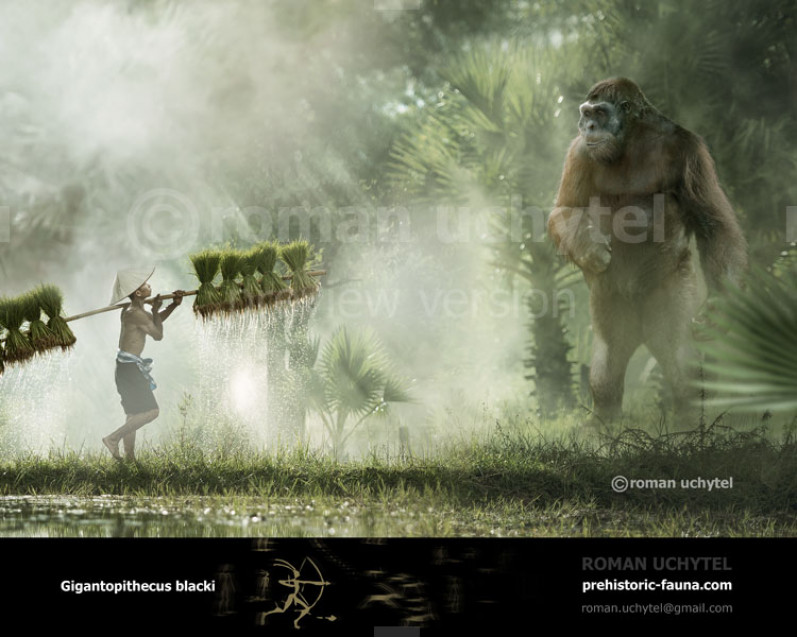
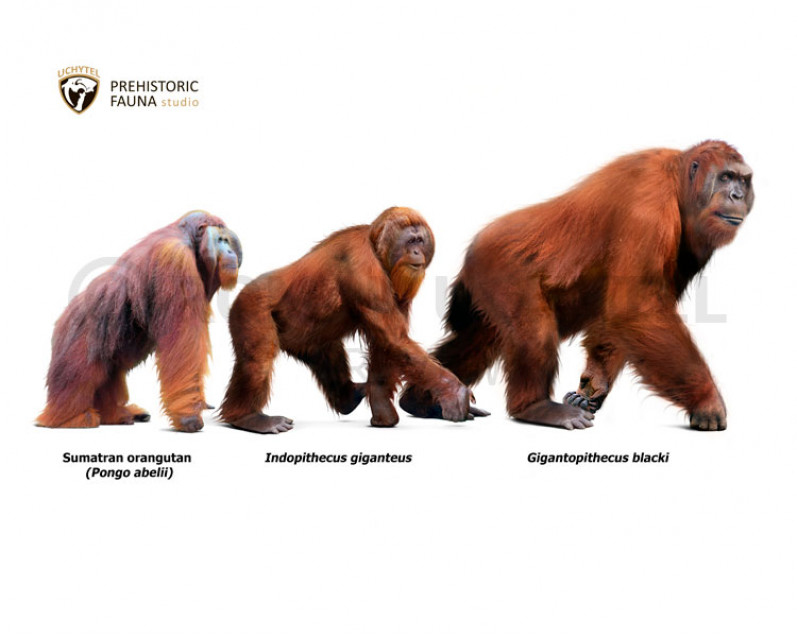
Gigantopithecus blacki
1717Gigantopithecus (†Gigantopithecus (von Koenigswald, 1935))
Order: Primates
Family: Hominidae
Tribe: †Sivapithecini
Temporal range: during the Early–Middle Pleistocene in Asia (~2–0.3 Ma years ago)
Dimensions: height - 300 сm, weight - 150-500 kg
A typical representative: †Gigantopithecus blacki von Koenigswald, 1935
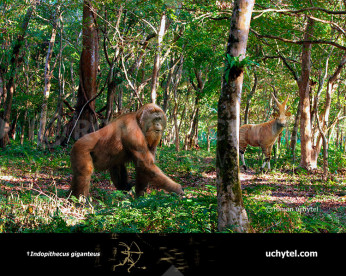
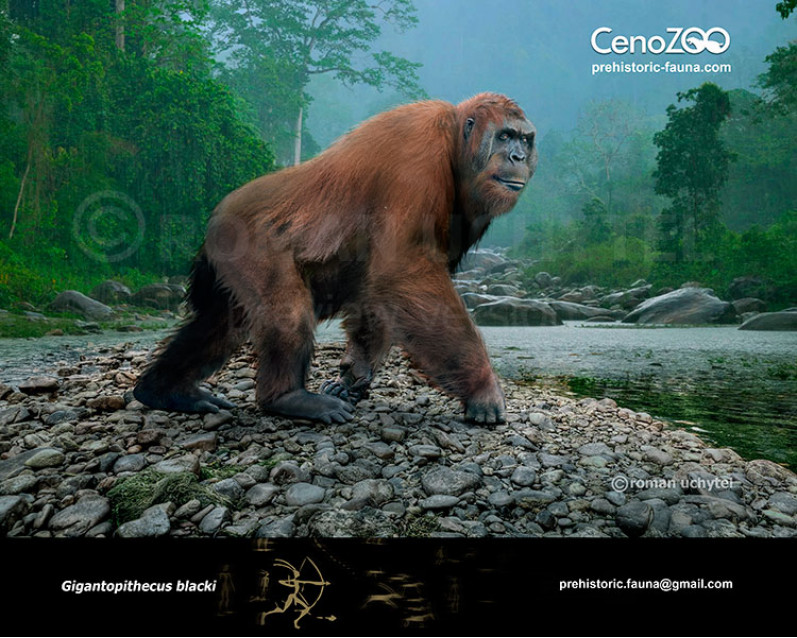
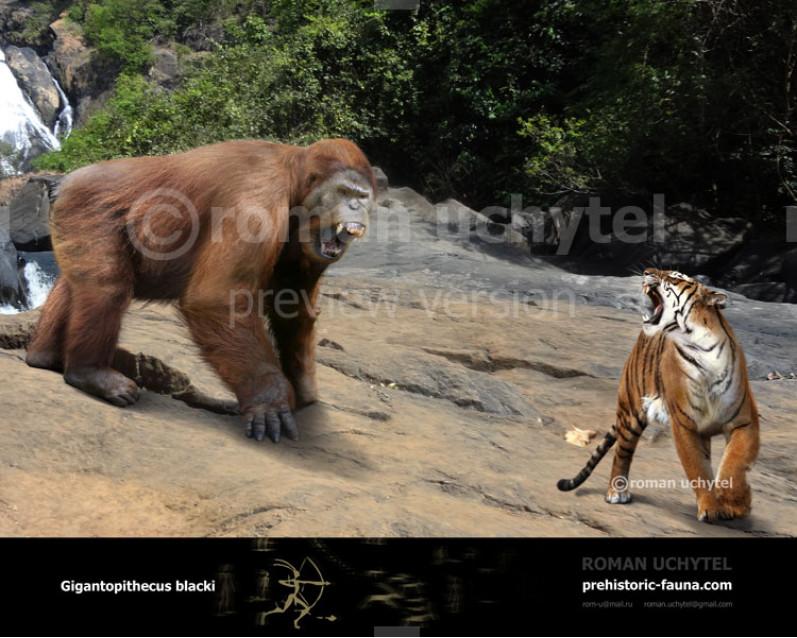
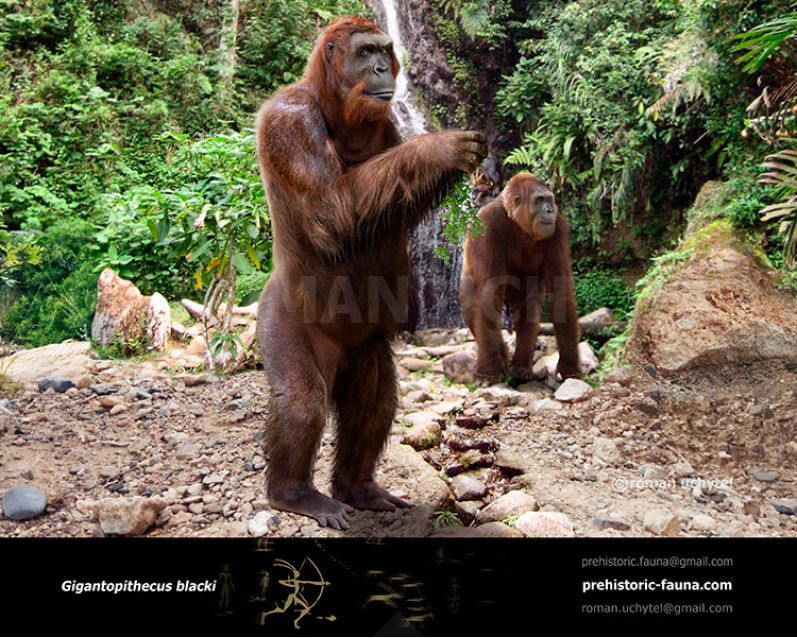
Gigantopithecus was the largest primate ever known. Gigantopithecus blacki inhabited the forests of southern China for nearly two million years and may have stood around 3 metres tall and weighed 200-300 kg. Despite its enormous size, this giant ape was a plant-eater, relying heavily on fruits and other forest vegetation. When changing climates made the forests more seasonal and open, Gigantopithecus struggled to adapt: its preferred foods became less available, its populations declined, and the giant ape eventually disappeared around 250.000 years ago. Remarkably, everything we know about this enormous animal comes from only a few jawbones and thousands of teeth - no complete skull or skeleton has ever been found.
The first Gigantopithecus fossil was recognized in 1935, when paleontologist Ralph von Koenigswald discovered an unusually large primate tooth being sold in a Hong Kong pharmacy as a traditional «dragon tooth». Later research revealed another surprise: Gigantopithecus was related to orangutans rather than gorillas or humans. Its mysterious size and fragmentary fossil record have also linked it in popular imagination with legendary giant apes such as the Yeti and Bigfoot. A fictional Gigantopithecus even appears as the enormous King Louie in Disney’s The Jungle Book (2016), while another giant ape inspired by the genus appears in Ice Age: Continental Drift (2012). The irony is that one of the most spectacular primates ever to exist remains one of the least completely known - a giant reconstructed almost entirely from its teeth and jaws.
-70x56.jpg "1")


4-70x56.jpg "5")
3-70x56.jpg "6")
-2012-70x56.jpg "7")


Gigantopithecus (†Gigantopithecus (von Koenigswald, 1935))
Order: Primates
Family: Hominidae
Tribe: †Sivapithecini
Temporal range: during the Early–Middle Pleistocene in Asia (~2–0.3 Ma years ago)
Dimensions: height - 300 сm, weight - 150-500 kg
A typical representative: †Gigantopithecus blacki von Koenigswald, 1935
Gigantopithecus was the largest primate ever known. Gigantopithecus blacki inhabited the forests of southern China for nearly two million years and may have stood around 3 metres tall and weighed 200-300 kg. Despite its enormous size, this giant ape was a plant-eater, relying heavily on fruits and other forest vegetation. When changing climates made the forests more seasonal and open, Gigantopithecus struggled to adapt: its preferred foods became less available, its populations declined, and the giant ape eventually disappeared around 250.000 years ago. Remarkably, everything we know about this enormous animal comes from only a few jawbones and thousands of teeth - no complete skull or skeleton has ever been found.
The first Gigantopithecus fossil was recognized in 1935, when paleontologist Ralph von Koenigswald discovered an unusually large primate tooth being sold in a Hong Kong pharmacy as a traditional «dragon tooth». Later research revealed another surprise: Gigantopithecus was related to orangutans rather than gorillas or humans. Its mysterious size and fragmentary fossil record have also linked it in popular imagination with legendary giant apes such as the Yeti and Bigfoot. A fictional Gigantopithecus even appears as the enormous King Louie in Disney’s The Jungle Book (2016), while another giant ape inspired by the genus appears in Ice Age: Continental Drift (2012). The irony is that one of the most spectacular primates ever to exist remains one of the least completely known - a giant reconstructed almost entirely from its teeth and jaws.