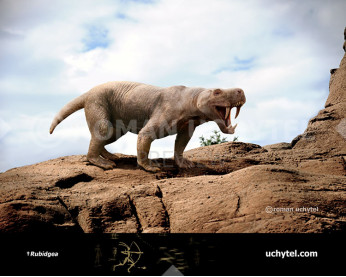
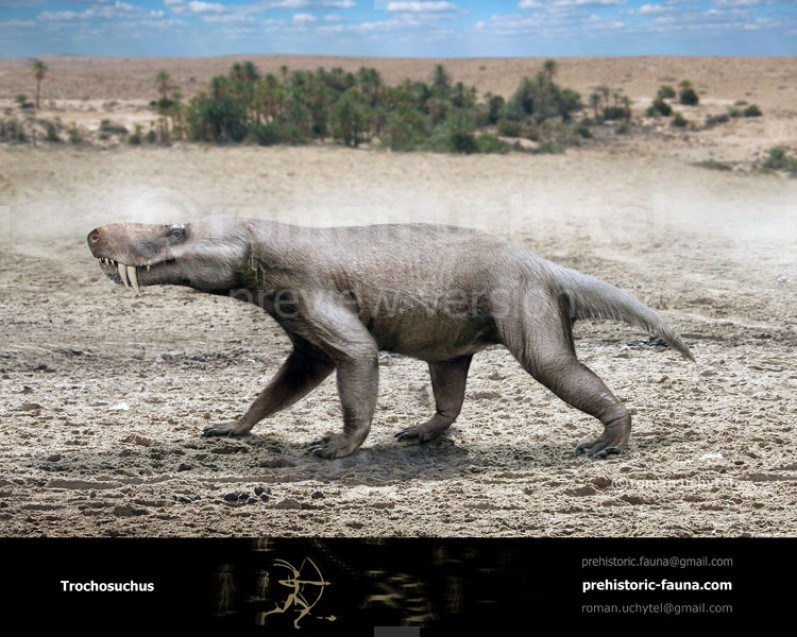
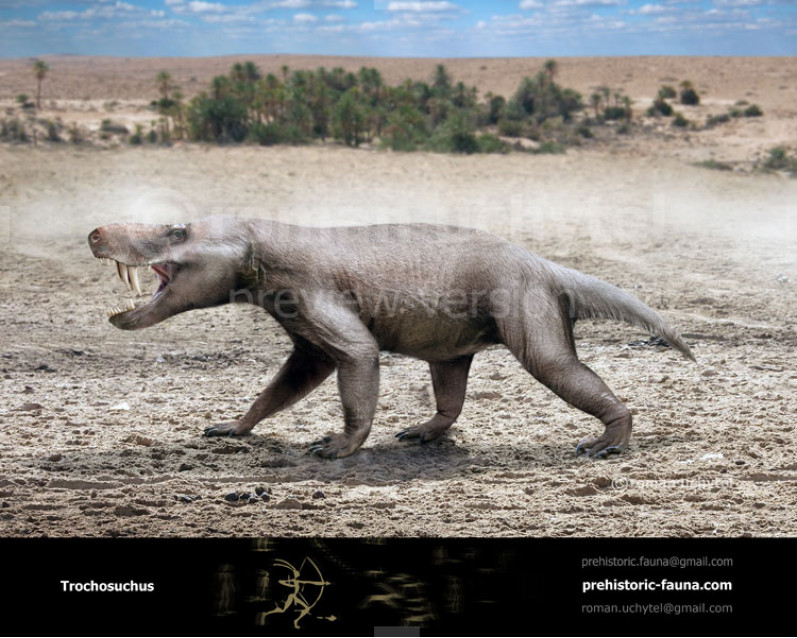
-797x638.jpg "Trochosuchus")
Trochosuchus
158158Trochosuchus (†Trochosuchus Broom, 1908)
Lycosuchus ?
Order: Therapsida
Suborder: †Therocephalia
Family: †Trochosuchidae
Dimensions: total body lengths reaching up to 3 m and long, weight ~150 kg
Temporal range:Late Permian period (South Africa)
A largest representative: Trochosuchus acutus Broom, 1908
Trochosuchus is a dubious genus of therocephalian therapsid from the middle Permian of South Africa based on a weathered and poorly preserved undiagnostic fossil of a lycosuchid therocephalian. It includes the type and only species, T. acutus. Trochosuchus was named by palaeontologist Robert Broom in 1908 based on its supposedly unique proportions of the simulatenous 'double' functional canines thought to be characteristic of lycosuchids, with the pair in front being noticeably smaller than the second pair behind (compared to roughly equally sized in Lycosuchus).
However, later studies have shown that the 'double canines' of lycosuchids represent overlap of alternating functional and replacement canines and not distinct tooth positions. As such, the variation in size between the front and back canines reflects stages of growth and replacement rather than specific differences. Trochosuchus therefore cannot be distinguished from other lycosuchids (i.e. Lycosuchus and Simorhinella) by its canines alone, and consequently the genus is now regarded by researchers as a nomen dubium (dubious name) based on Lycosuchidae incertae sedis.


-70x56.jpg "3")
Trochosuchus (†Trochosuchus Broom, 1908)
Lycosuchus ?
Order: Therapsida
Suborder: †Therocephalia
Family: †Trochosuchidae
Dimensions: total body lengths reaching up to 3 m and long, weight ~150 kg
Temporal range:Late Permian period (South Africa)
A largest representative: Trochosuchus acutus Broom, 1908
Trochosuchus is a dubious genus of therocephalian therapsid from the middle Permian of South Africa based on a weathered and poorly preserved undiagnostic fossil of a lycosuchid therocephalian. It includes the type and only species, T. acutus. Trochosuchus was named by palaeontologist Robert Broom in 1908 based on its supposedly unique proportions of the simulatenous 'double' functional canines thought to be characteristic of lycosuchids, with the pair in front being noticeably smaller than the second pair behind (compared to roughly equally sized in Lycosuchus).
However, later studies have shown that the 'double canines' of lycosuchids represent overlap of alternating functional and replacement canines and not distinct tooth positions. As such, the variation in size between the front and back canines reflects stages of growth and replacement rather than specific differences. Trochosuchus therefore cannot be distinguished from other lycosuchids (i.e. Lycosuchus and Simorhinella) by its canines alone, and consequently the genus is now regarded by researchers as a nomen dubium (dubious name) based on Lycosuchidae incertae sedis.