Kyptoceras
202157202157Kyptoceras († Kyptoceras (Webb, 1981))
Order: Artiodactyla
Family: Protoceratidae
Temporal range: during the Miocene to Early Pliocene epoch 23.03—3.6 Ma (North America)
Dimensions: height - 80- 100 сm, weight -30 - 60 kg
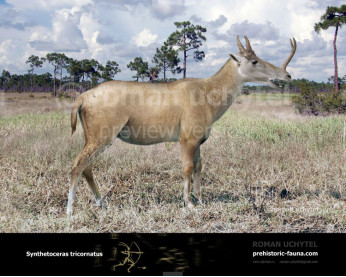
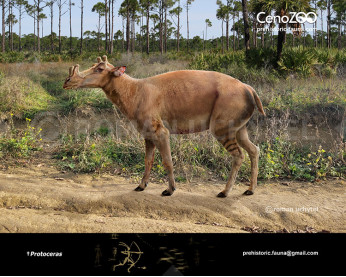
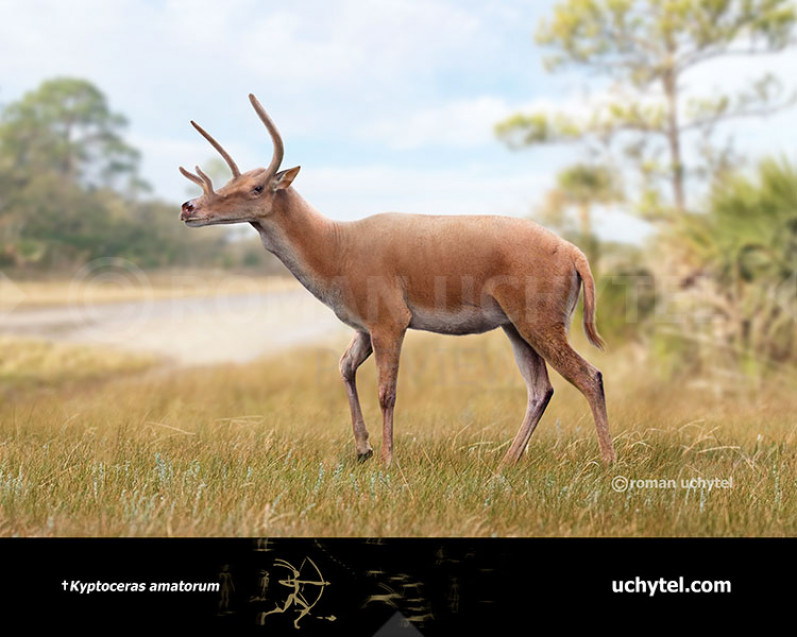
Kyptoceras was a small extinct artiodactyl ungulate mammal of the family Protoceratidae, endemic to southeastern North America from the Miocene to Early Pliocene epoch.
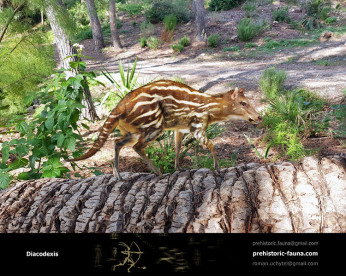
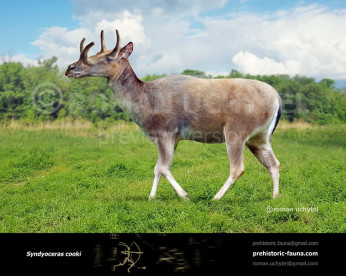
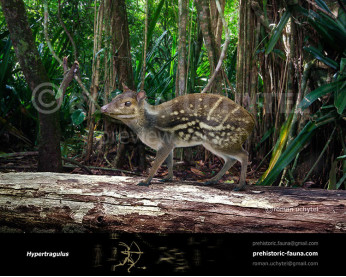
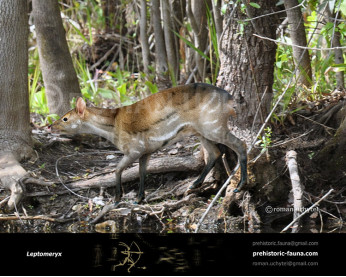
Protoceratidae is an extinct family of herbivorous North American even-toed ungulates that lived during the Eocene through Pliocene. While early members of the group were hornless, in later members males developed elaborate cranial ornamentation. They are variously allied with Ruminantia or Tylopoda. However, recently a relationship to chevrotains in the infraorder Tragulina has been proposed.
Kyptoceras is the last known member of the family. The protoceratids were believed to have been driven to extinction by more advanced grazing herbivores. The genus name of Kyptoceras comes from its bent horns, in which the two horns above the eyes curved over its head, and the two nasal horns pointed forward. The species name, amatorum, comes in honor of all amateur fossil collectors, including Frank Garcia (Ruskin, Florida) the amateur who found it and donated it to the Florida Museum of Natural History.
Kyptoceras († Kyptoceras (Webb, 1981))
Order: Artiodactyla
Family: Protoceratidae
Temporal range: during the Miocene to Early Pliocene epoch 23.03—3.6 Ma (North America)
Dimensions: height - 80- 100 сm, weight -30 - 60 kg
Kyptoceras was a small extinct artiodactyl ungulate mammal of the family Protoceratidae, endemic to southeastern North America from the Miocene to Early Pliocene epoch.
Protoceratidae is an extinct family of herbivorous North American even-toed ungulates that lived during the Eocene through Pliocene. While early members of the group were hornless, in later members males developed elaborate cranial ornamentation. They are variously allied with Ruminantia or Tylopoda. However, recently a relationship to chevrotains in the infraorder Tragulina has been proposed.
Kyptoceras is the last known member of the family. The protoceratids were believed to have been driven to extinction by more advanced grazing herbivores. The genus name of Kyptoceras comes from its bent horns, in which the two horns above the eyes curved over its head, and the two nasal horns pointed forward. The species name, amatorum, comes in honor of all amateur fossil collectors, including Frank Garcia (Ruskin, Florida) the amateur who found it and donated it to the Florida Museum of Natural History.