
Sivapanthera
4646Sivapanthera (Sivapanthera Kretzoi, 1929)
Order: Carnivora
Family: Felidae
Time period: Pliocene-Pleistocene of Asia
Dimensions: 1,5m in length, 90-100 cm in height, 90 kg of weight.
A typical representative: Sivapanthera brachygnathus (Lydekker, 1884)
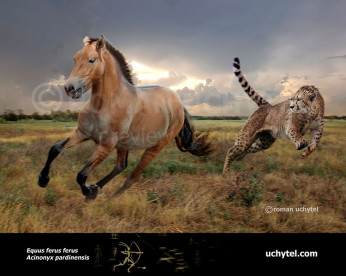
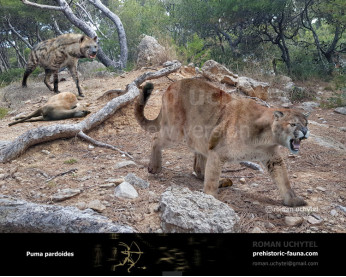
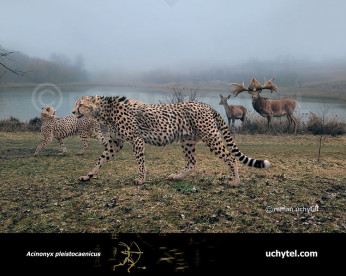
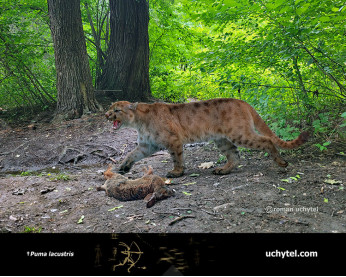
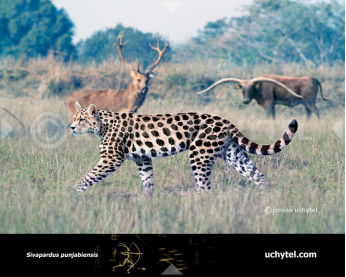
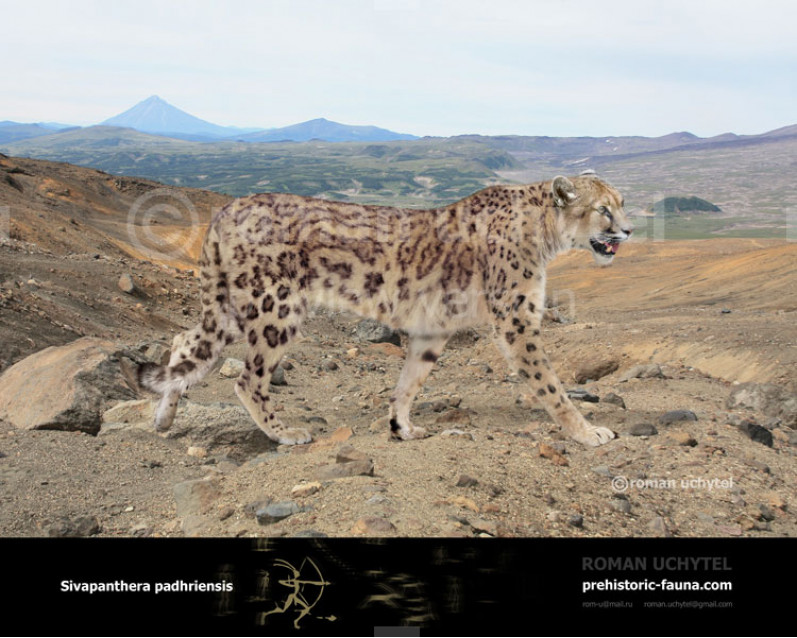
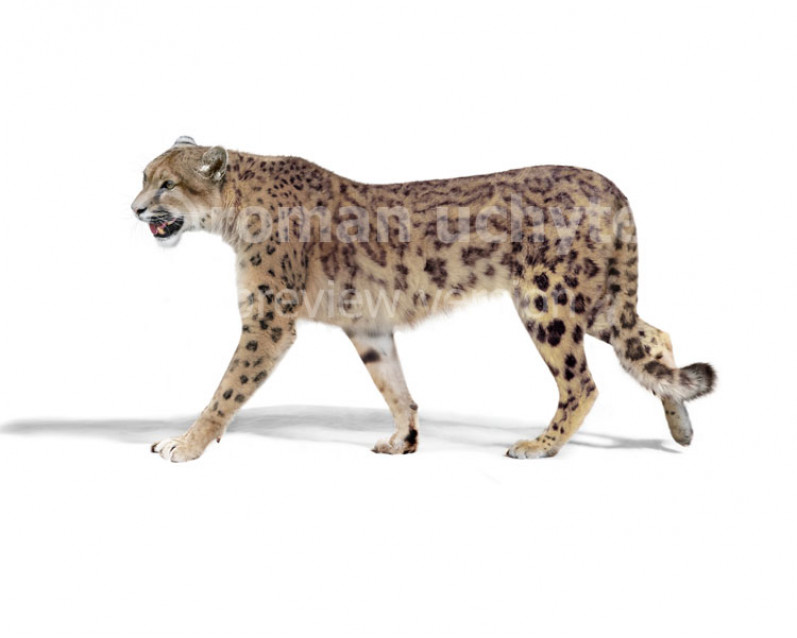
Sivapanthera is a prehistoric genus of felid described by Kretzoi in 1929. Species of Sivapanthera are closely related to the modern cheetah but differ from modern cheetahs by having relatively longer brain cases, flatter foreheads, narrower nostrils and larger teeth. In many ways, skulls of Sivapanthera show similarity to those of the puma, or even those of Panthera. Scholars differ on the validity of this genus, while some think that it should be treated as a distinct genus, others think that its members should be treated as members of the Acinonyx genus, or even as subspecies of Acinonyx pardinensis.
A new species, Sivapanthera linxiaensis from Early Pleistocene deposits in China's Dongxiang Autonomous County, was described in 2004.
The status of Sivapanthera species is unresolved, with some researchers considering them all junior synonyms of Acinonyx pardinensis, subspecies of A. pardinensis, species in the genus Acinonyx, or belonging to the genus Sivapanthera is various states of synonymy with each other. S. pleistocaenicus was reclassified as a new species of Acinonyx.


Sivapanthera (Sivapanthera Kretzoi, 1929)
Order: Carnivora
Family: Felidae
Time period: Pliocene-Pleistocene of Asia
Dimensions: 1,5m in length, 90-100 cm in height, 90 kg of weight.
A typical representative: Sivapanthera brachygnathus (Lydekker, 1884)
Sivapanthera is a prehistoric genus of felid described by Kretzoi in 1929. Species of Sivapanthera are closely related to the modern cheetah but differ from modern cheetahs by having relatively longer brain cases, flatter foreheads, narrower nostrils and larger teeth. In many ways, skulls of Sivapanthera show similarity to those of the puma, or even those of Panthera. Scholars differ on the validity of this genus, while some think that it should be treated as a distinct genus, others think that its members should be treated as members of the Acinonyx genus, or even as subspecies of Acinonyx pardinensis.
A new species, Sivapanthera linxiaensis from Early Pleistocene deposits in China's Dongxiang Autonomous County, was described in 2004.
The status of Sivapanthera species is unresolved, with some researchers considering them all junior synonyms of Acinonyx pardinensis, subspecies of A. pardinensis, species in the genus Acinonyx, or belonging to the genus Sivapanthera is various states of synonymy with each other. S. pleistocaenicus was reclassified as a new species of Acinonyx.
-346x277.jpg "Miracinonyx trumani")